Hello, curious minds!
Today, we’re diving headfirst into a world of vibrant colours, squishy textures, and endless possibilities – the incredible realm of homemade playdough. Forget the store-bought tubs for a moment (though they have their place!), because what we’re talking about today is a truly special kind of creative magic. It’s about mixing, stirring, kneading, and discovering, all while fostering a powerful learning environment right in your own kitchen.
Where Learning is Just a Squeeze Away!
Why Homemade Playdough? A Deep Dive into Developmental Delights!
Beyond the sheer fun factor (which, let’s be honest, is huge!), homemade playdough is a powerhouse for child development. It’s a sensory experience that naturally invites exploration and discovery, touching upon so many aspects of a child’s growth.
1. Sensory Exploration: A Feast for the Senses (and Brain!)
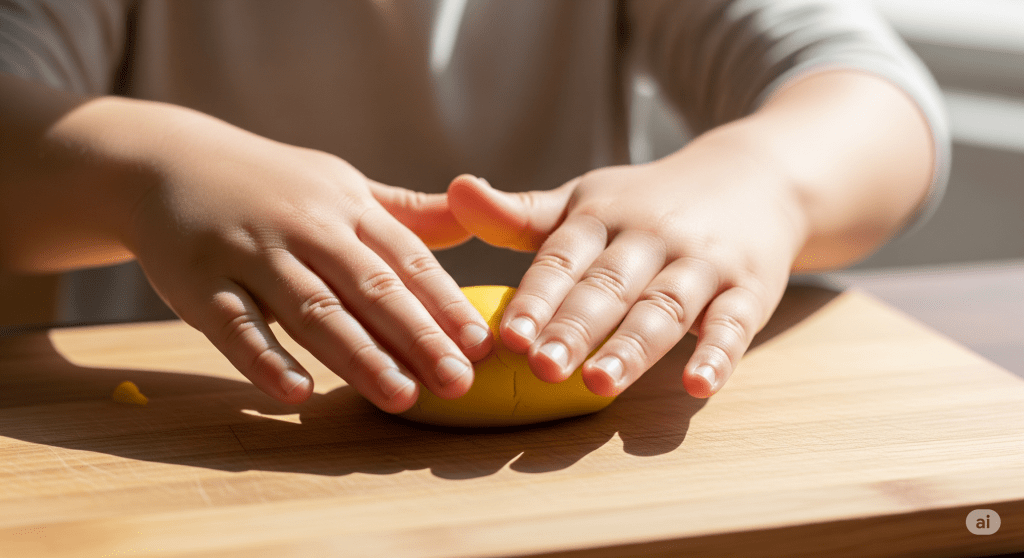
From the moment little hands squish, roll, and pull at the dough, they are engaging in invaluable sensory play. The soft, pliable texture, the faint smell (especially if you add a drop of essential oil or extract!), and the vibrant colours all stimulate different senses. This multi-sensory engagement helps children to:
- Develop Tactile Discrimination: They learn about different textures, temperatures (warm when fresh, cooler when stored), and resistance. Is it sticky? Smooth? Stretchy?
- Process Sensory Information: For some children, sensory play helps them regulate their bodies and emotions. It can be calming and grounding, allowing them to focus and be present.
- Build Neural Connections: Every new sensory experience helps to build and strengthen neural pathways in the brain, essential for all future learning.
2. Fine Motor Skills: The Little Muscles Doing Big Work
Watch a child manipulating playdough, and you’re witnessing an intense workout for their small hand and finger muscles. This seemingly simple act is crucial for developing fine motor skills, which are foundational for:
- Pincer Grasp Development: Picking up small pieces of dough, or pressing tiny objects into it, strengthens the pincer grasp, vital for holding a pencil, buttoning clothes, and tying shoelaces.
- Hand-Eye Coordination: As they roll snakes, flatten pancakes, or cut shapes, children are constantly coordinating what their eyes see with what their hands are doing.
- Bilateral Coordination: Using both hands together (one to hold the dough, one to roll a pin, for example) is excellent for developing bilateral coordination.
- Pre-Writing Skills: The actions involved in playdough play – squeezing, rolling, flattening, pinching – are all precursors to the precise movements needed for writing. Think about the strength needed in the hands to control a pencil – playdough builds that strength!
3. Cognitive Development: Problem-Solving, Creativity, and Beyond
Playdough isn’t just about squishing; it’s a launchpad for complex thinking and problem-solving.
- Imagination and Creativity: With no fixed rules or outcomes, playdough encourages children to invent stories, create characters, and build entire worlds. Today it’s a cake, tomorrow it’s a car, the next day it’s a monster! This open-ended play is a cornerstone of imaginative development.
- Problem-Solving: “How do I make this snake longer?” “How can I make this ball perfectly round?” “How do I get this shape out of the dough?” These are all mini-problems children solve as they play. They experiment, test hypotheses, and learn through trial and error.
- Mathematical Concepts: Introduce cookie cutters, and suddenly you’re exploring shapes! Talk about “more” or “less” dough, “long” or “short” snakes, “big” or “small” balls, and you’re subtly introducing mathematical vocabulary and concepts. Dividing the dough into equal parts for different colours is another hands-on lesson in fractions.
- Language Development: As children play, they often narrate their actions, talk to their creations, or interact with others. This rich environment provides countless opportunities for vocabulary expansion, descriptive language, and storytelling. Encourage them by asking, “What are you making?” or “Tell me about your [creation]!”
4. Emotional Regulation and Self-Expression: A Calming Outlet
The act of manipulating playdough can be incredibly therapeutic and calming for children.
- Stress Relief: The repetitive motions of kneading and squishing can be a wonderful outlet for releasing energy or tension. It’s a safe and constructive way to express feelings.
- Self-Expression: Playdough allows children to express ideas and feelings non-verbally. They can create things that represent their inner world, whether it’s a happy family, a scary monster, or a cozy home.
- Focus and Concentration: Many children find playdough play so engaging that it helps them to focus for extended periods, building their attention span.
Making the Most of Your Playdough Adventures
Now that you’ve got your beautiful, fresh batch of homemade playdough, how can you maximize its potential for learning and fun?
- Offer Open-Ended Tools: Forget expensive sets! Simple household items are often the best: cookie cutters, plastic knives, rolling pins (even a sturdy water bottle can work!), garlic presses, blunt scissors, straws, plastic forks, Lego bricks for imprints, natural elements like leaves or twigs, beads, buttons, pasta shapes, small animal figurines. The less prescriptive the tools, the more creative the play.
- Invite Collaboration: Playdough is fantastic for solo play, but it also shines as a collaborative activity. Work alongside your child, ask open-ended questions (“What if we…?”, “How could we make this…?”), and model creative exploration.
- Follow Their Lead: Resist the urge to dictate what they should make. If they just want to squish and mash, that’s perfectly fine! They are exploring texture and building hand strength. Their play will evolve naturally.
- Incorporate Themes: Connect playdough to books you’re reading, seasons, or upcoming holidays. Make “snow” playdough in winter, “pumpkin” playdough in autumn, or “ocean” playdough for a summer theme.
- Document Their Creations: Take photos of their masterpieces! This validates their efforts and creates a wonderful memory of their evolving skills and imagination.
Now, for the recipe that will unlock hours of joy and countless learning opportunities:
Our Go-To Homemade Playdough Recipe
Ingredients:
- 2.5 cups water
- 1 1/4 cup salt
- 1 1/2 tablespoon cream of tartar
- 5 tablespoons of vegetable oil
- 2.5 cup flour (all-purpose is preferred, and wheat flour will also work)
- Food colouring or liquid watercolours. I’m a fan of Sax Concentrated Liquid Watercolours and Wilton Icing Colors, which make gorgeous shades of playdough to match any occasion, mood, or toddler request.
Steps:
- Place all the ingredients except the food colouring together in a large pot and stir until somewhat smooth. It will be lumpy. Not to worry, the dough will get smoother as it cooks.
- Place the pot on the stove and cook over a low heat. Stir frequently with a large spoon. The water will slowly evaporate out of the mixture, and you’ll notice it starts to take on a sticky appearance. Keep mixing until the edges of the dough along the side and bottom of the pan appear dry. Pinch a piece of dough. If it’s not gooey, it is ready.
- Place the dough on a countertop, baking sheet, or large cutting board that can withstand a little food colouring.
- Knead the warm dough until it’s smooth, and then divide it into the number of colours that you’d like to make. I divided mine into four balls, flattened each of them, added a little bit of food colouring or liquid watercolours, and then kneaded it in. If you don’t want paint-stained hands, you could wear gloves for this step.
- Play with the dough right away or store it in a large Ziplock bag or sealed container. Unused, it’ll keep for months.

Homemade playdough is more than just a toy; it’s a versatile, low-cost, and incredibly effective learning tool. It’s a wonderful way to connect with your child, witness their discoveries, and celebrate the pure joy of hands-on, imaginative play. So, gather your ingredients, embrace the happy mess, and prepare to be amazed by the magical world of homemade playdough!
Happy squishing!
 Green Willow Crafts and Cooking
Leave a comment