
Finger & Loom Knitting
Knitting might sound intimidating, but there are wonderfully simple ways to introduce children to the joy of yarn! Two fantastic starting points are finger knitting and loom knitting. These methods skip the complexity of traditional needles, making them accessible and fun for young crafters. They’re excellent for developing fine motor skills, hand-eye coordination, and creativity, all while creating tangible results that kids can be proud of.
Finger Knitting: Knitting Without Needles!
- What it is: A super simple technique using just your fingers to create a knitted fabric.
- How to Start:
- Wrap yarn around your forefinger and middle finger.
- Bring the lower loop over the top loop and off your finger.
- Repeat, wrapping and lifting loops to create a chain.
- You can create a flat piece or a tube by joining the ends.
- Great for: Absolute beginners, especially those who want to try knitting without traditional needles. It’s fantastic for making scarves, bracelets, or small decorative items.
Loom Knitting: Structured Fun
- What it is: Uses a round or rectangular loom with pegs to hold the yarn while you knit.
- How to Start:
- Wrap the yarn around the pegs following a simple pattern.
- Use a hook or your fingers to lift the bottom loop over the top loop on each peg.
- Continue wrapping and lifting loops to create a knitted fabric.
- Great for: Beginners who want a slightly more structured way to knit. Looms are excellent for making hats, scarves, blankets, and more.
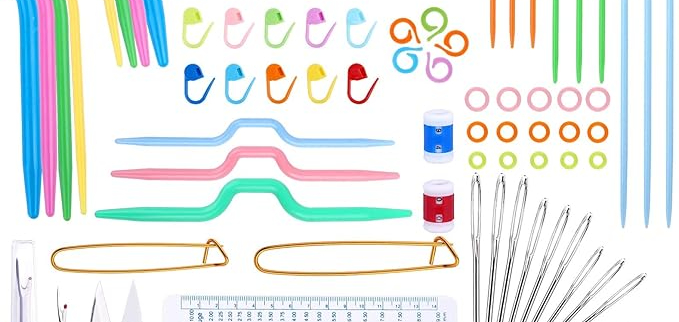
For those ready to dive into the world of yarn crafts, the good news is you don’t need a massive collection of specialized tools to begin. At a basic level, aspiring knitters will need yarn—the star of the show!—along with a few helpful accessories. While finger and loom knitting often don’t require them, traditional knitting typically calls for knitting needles. Other useful items include a stitch guide to help keep track of patterns, a stitch holder to temporarily hold live stitches, stitch markers to denote specific points in your work, and a tapestry needle for weaving in ends and seaming. Most sewing and knitting storefronts will usually have a starter kit full of helpful items to get you on your way.
Tips for Yarn Crafting Beginners:
- Start Simple: A scarf or a dishcloth is a great way to practice basic stitches and techniques.
- Use Chunky Yarn: Thicker yarn is easier for small hands to handle, and stitches are more visible, making the learning process smoother.
Crafting with children is not just about the final product; it’s about the journey of discovery, the development of fine motor skills, problem-solving, and the sheer joy of creating something with their own hands. So gather your supplies, choose a simple project, and embark on a wonderful crafting adventure with your creative child!
 Green Willow Crafts and Cooking
Leave a comment